
10 Stunning Ideas for Decorative Woodworking Projects To Enhance Your Home
Decorative projects still need discipline
Decorative woodworking can be fun without becoming fluff. The piece still has to fit the room, sit or hang safely, and look clean when somebody walks up to it. Bad proportions, rough edges, and a rushed finish will show faster on décor than they will on a rough shop fixture.
Before you pick a project because the picture looks good, decide what job it needs to do and how much room it gets. If you want a broader decision framework first, use the woodworking designs guide. HN49 is the inspiration list; that guide is the better place to decide which kind of project fits your tools, space, budget, and skill level.
Quick answer: pick the project by room value and build difficulty
These ten ideas range from small repeatable pieces to furniture and wall work. None of them needs to be complicated for the sake of being impressive. The best choice is the one that improves the room and still gives you a realistic shot at clean layout, clean cuts, solid assembly, and a finish you can control.
| Idea | What makes it useful | Main buildability issue |
|---|---|---|
| 1. Wall shelf | Display + storage | Proportion and secure mounting |
| 2. Picture frame | Small custom detail | Repeatable miters and finish |
| 3. Plant stand | Adds height and greenery | Stability and moisture exposure |
| 4. Centerpiece or tray | Table function + décor | Flatness, edges, handles |
| 5. Coasters | Small repeatable project | Consistency and moisture-resistant finish |
| 6. Entryway key/mail shelf | Controls daily clutter | Mounting and useful dimensions |
| 7. Blanket ladder | Vertical display | Stability and wall/floor contact |
| 8. Small shoe bench | Seating + storage | Joinery, load, footprint |
| 9. Decorative wall panel | Large visual statement | Layout, spacing, backing |
| 10. Keepsake box | Small functional gift | Small-part accuracy and lid fit |
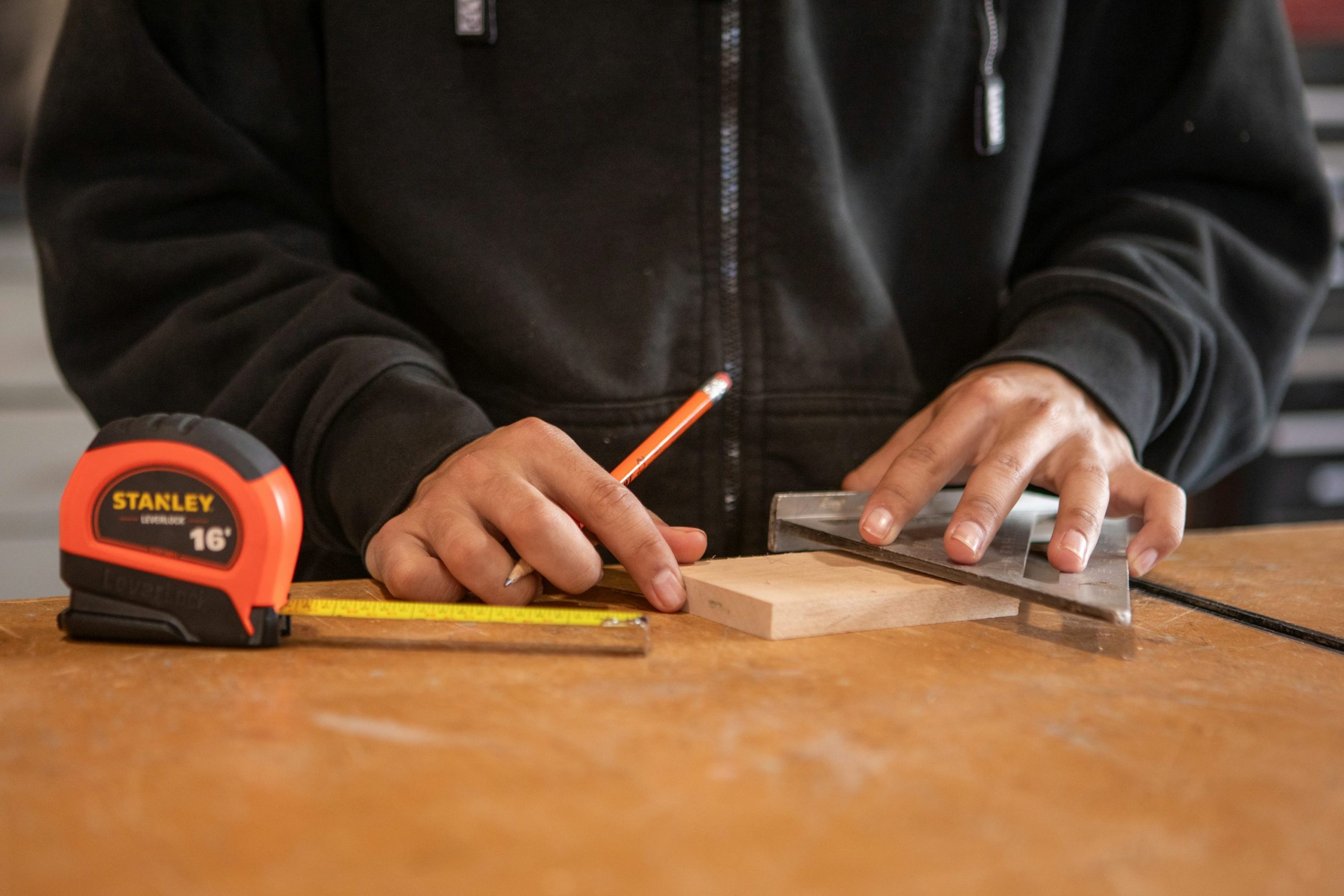
1. Build a wall shelf that fits the wall instead of fighting it
A wall shelf is one of the easiest ways to add useful woodworking without filling the room with another piece of furniture. It can hold books, small carvings, framed photos, or the things that usually end up scattered across a counter.
Start with proportion. A thick live-edge slab can look right on a big open wall and clumsy in a small hallway. A thinner shelf with simple brackets may fit a tighter room better. Whatever style you choose, the shelf itself is only half the job—the mounting method has to suit the wall and the load you expect it to carry.
Keep the stock straight, square the ends, soften the exposed edges, and give the finish enough time. A simple shelf done cleanly usually looks better than a complicated shelf that is trying too hard.
2. Picture frames are a good test of accuracy
A picture frame does not use much wood, but it exposes sloppy work fast. Four corners have to agree with each other. The profile has to stay consistent. The finish should support the photo instead of competing with it. If you have usable offcuts, the leftover tongue-and-groove project guide is worth checking before you buy more stock.
Rustic oak, walnut, cherry, pine, and reclaimed stock can all work, but the species is only part of the look. Width, thickness, edge profile, and finish control the frame just as much. For a first frame, a clean simple profile gives you fewer places to hide a bad miter—and that is a good thing.
Planning the room before you start cutting? The free 10-page T&G Project Starter Guide gives you practical planning and hard-stop checks you can use before finished wood hides the decisions.
3. A plant stand has to be stable before it gets stylish
Plant stands are useful because they add height without taking over the room. A low stand can pull a pot off the floor; a taller stand can bring greenery into an empty corner. Either way, stability comes first.
Watch the footprint, leg angle, and center of gravity. If the stand feels tippy before the plant goes on it, the plant is not going to improve the situation. Think about moisture too. Watering, damp saucers, and wet pots can punish a finish that was chosen only for color.
4. Make a centerpiece or serving tray that is easy to live with
A centerpiece or tray works because it can be decorative without becoming permanent clutter. Keep the shape simple enough that it can actually be picked up, wiped down, and moved when the table is needed for something else.
Flat stock, clean edges, and comfortable handles matter more than adding another decorative cutout. If the piece may touch food directly, use a finish and material system that is specifically appropriate for that use rather than assuming every wood finish belongs there.
A good rule of thumb: if the project only looks good from ten feet away, the design is doing too much work for the craftsmanship. Keep the proportions simple enough that your layout, joints, edges, and finish can carry their share.
5. Coasters reward repeatability
Coasters are small, but they are a good exercise in making several pieces agree with each other. Cut one crooked and the whole set looks crooked. Sand one more aggressively than the others and the difference shows.
Round, square, hexagonal, or simple laminated designs can all work. Keep the size comfortable to handle and choose a finish that can tolerate the kind of moisture the pieces will actually see. This is a good scrap-wood project because you can practice consistency without burning through much material.
6. An entryway key-and-mail shelf can solve real clutter
Small entryway projects earn their keep quickly. A shallow shelf with hooks or a simple mail slot can give keys, sunglasses, dog leashes, and incoming mail one place to land instead of spreading across the nearest counter.
The trap is adding too many features. Figure out what actually gets dropped at the door, then build for that. Keep the shelf depth reasonable for the space, make the hook spacing useful, and mount the piece to something capable of carrying the expected load.
7. A blanket ladder is simple, but it still needs good proportions
A leaning blanket ladder is mostly straight stock and repeated spacing, which makes it approachable. It also means every spacing error is visible. If the rungs wander or the side rails are not parallel, the whole piece looks off.
Size it for the wall before you cut. Protect the floor and wall surfaces where the ladder contacts them, and do not treat a decorative leaning ladder like climbing equipment. Its job is to display lightweight textiles, not carry a person.
8. A small shoe bench adds function without needing to become furniture school
A compact bench near an entry or mudroom can give you a place to sit while you put shoes on and a place to get shoes off the floor. Keep the first version simple: a solid top, stable legs or end panels, and one useful storage shelf is enough.
This is where tool burden starts to matter more. If a project needs repeated crosscuts, drilling, sanding, and controlled assembly, make sure your setup supports that work before the design gets fancy. The woodworking tools guide covers the basic tool roles without turning the project into a shopping spree.
9. Decorative wall panels make layout the design
Slat panels, geometric wall art, and patterned wood panels can change a room quickly because the project covers more visual space than a frame or shelf. That also means layout mistakes get amplified.
Work out the spacing before you start attaching pieces. Decide where the pattern begins and ends, what happens at the perimeter, and how the panel will deal with outlets, trim, corners, or an uneven wall. Offcuts can be useful here, but sort them by thickness and condition before the layout becomes dependent on pieces that do not actually match.
10. A keepsake box is small enough to finish and precise enough to teach you something
A box is a good decorative project because the parts are manageable, the material cost can stay low, and small improvements in accuracy show up immediately. Square corners, a lid that fits without fighting, and hardware that lines up will make the piece feel better than extra ornament ever will.
Keep the first one straightforward. Clean stock, a simple joint you can execute consistently, a controlled lid fit, and a finish that suits the wood are enough. If you later want inlays, carving, or more involved joinery, add them because your basic box work is ready for them.
Compare build difficulty before you choose
A good decorative project is not automatically the project with the most parts. Shelves, frames, and coasters are useful when you want a shorter build. A bench or wall panel asks more from layout, stock preparation, assembly, and finishing. The right choice depends on the room, the tools you already own, and how much time you actually want to spend correcting little mistakes.
Before you start, look at the stock you have, the cuts the project requires, how you will hold the parts during assembly, how it will be mounted or supported, and what the finish needs. That quick check tells you more about whether the project belongs in your shop than another hour of scrolling through inspiration photos.
Project-build video: this 731 Woodworks demonstration is useful because it shows how simple decorative pieces still come back to layout, repeatable cuts, assembly, and finish. Use it for the project logic—not as a substitute for the instructions for your own tools or hardware.
Video: “2 Easy DIY Projects For Beginners and 1 With a Twist” — 731 Woodworks.
Want the full tongue-and-groove install order in one place?
I put the layout checks, prep work, tool judgment, fastening sequence, and common mistake fixes into one practical PDF handbook so you are not guessing your way through the job.
Build the simple version cleanly first
Decorative woodworking gives you room to be creative, but the basics still carry the project. Straight stock helps. Clean layout helps. Repeatable cuts help. Sanding and finish matter. And the piece has to make sense where it is going.
If you want hands-on instruction before tackling a project that stretches your current skills, the woodworking workshop guide is the better next route.
The bottom line
You do not need ten projects in your house. You need one project that solves something, fits the room, and gives you a realistic path to a clean result. Pick the shelf if the wall needs useful display space. Pick the frame or coasters if you want repeatability practice. Pick the bench if the entry needs function. Pick the wall panel if the room needs a bigger visual change.
Then keep the design under control long enough to build it well. That is usually what separates a piece that feels handcrafted from one that just feels homemade.
That’s it for today, folks. Hope this helps you with your projects. Enjoy the day. I’ll see you on the next one.