
Top 10 Benefits of Using Wood Veneer in Interior Design
Why wood veneer is worth understanding
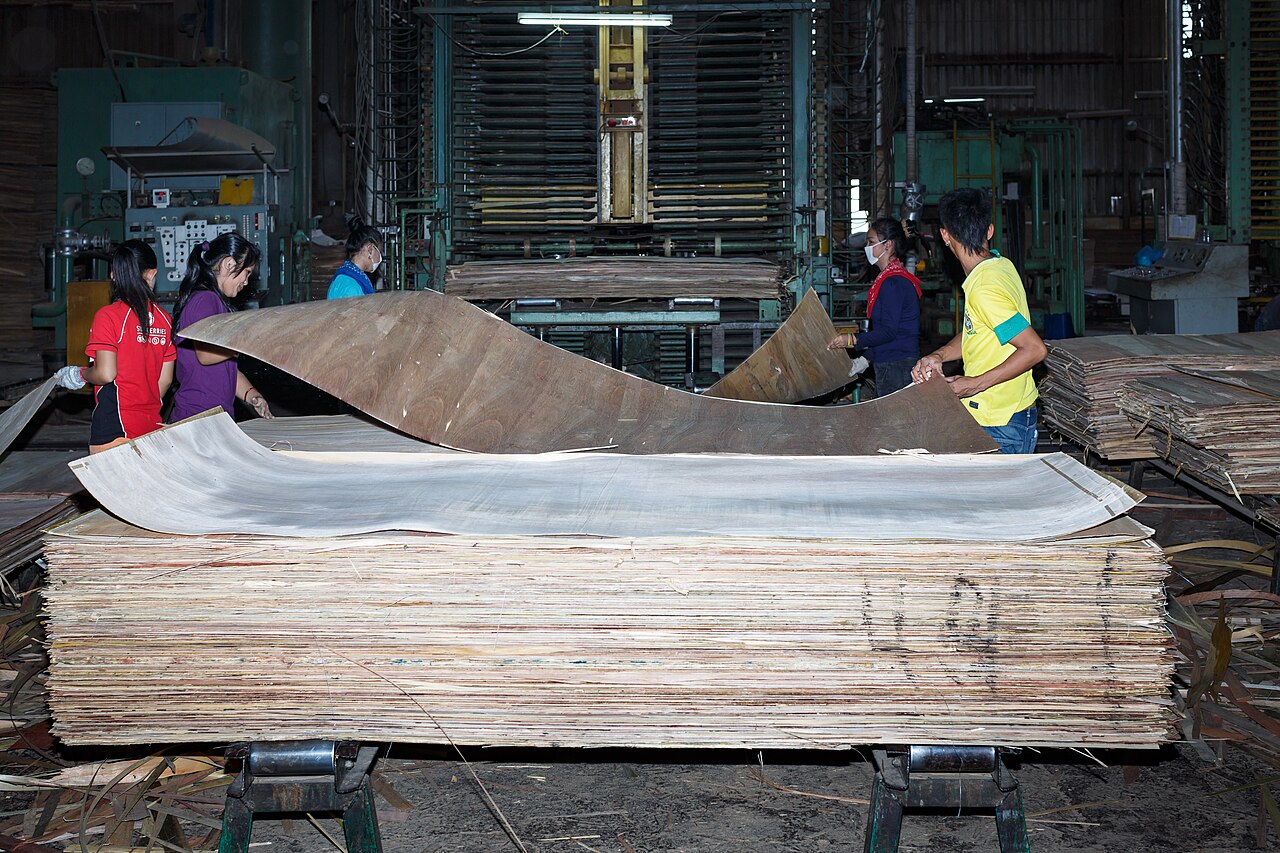
Wood veneer gets talked about like it is either a cheap substitute for solid wood or some kind of design shortcut. Neither description is very useful. Veneer is a thin layer of real wood used over a core or substrate, and when the whole panel is chosen and built correctly it can be an excellent interior material.
The important part is that the face and the core do different jobs. The veneer gives you the visible species, grain, cut, and color. The core controls a lot of the flatness, strength, fastening behavior, and movement of the finished panel. Treating those as the same thing is where a lot of bad advice starts.
If you are still deciding what kind of woodworking project or material direction fits the room, the woodworking designs guide is the better place to compare the overall project first.
Quick answer: veneer gives you real wood where you see it, without making the whole part solid wood
That is the basic advantage. You can put a real wood face over a suitable panel core and get the appearance, grain, and finish of the chosen species across a large surface. Whether that finished part is actually stable, durable, or appropriate for the room depends on the core, construction, adhesive, finish, environment, and how the piece is installed.
For interior cabinetry, wall panels, built-ins, doors, and furniture parts, that combination can make a lot of sense. Here are the ten benefits that matter in practice.
1. You get a real wood surface
Wood veneer is actual wood, not a printed imitation. That matters when the design depends on natural grain, figure, color variation, and the way a transparent finish interacts with the surface.
You can still sand through veneer if you get aggressive, and thin faces need more care than thick solid stock. But when the surface is prepared and finished correctly, the visible face is still real wood. That is a different design result from plastic laminate or a printed wood pattern.
2. You have far more control over species and cut
Veneer gives designers and woodworkers a wide range of species and slicing choices. Plain-sliced, quartered, rift, and rotary cuts can produce very different grain patterns from the same general species family.
That is useful because the look of a room is not controlled by species name alone. A rift-cut oak face reads very differently from a plain-sliced oak face. The grain direction and cut can make a cabinet wall look quiet and linear or much more active.
3. You can plan grain matching across several panels
One of veneer’s strongest design advantages is the ability to control how neighboring leaves and panels relate to each other. Book matching, slip matching, sequencing, and other match strategies can make a run of doors, cabinet faces, or wall panels feel intentional instead of random.
This is where samples and actual panel layout matter. Natural wood varies. If color and grain continuity are important, you want to make those choices before the material is cut up and spread across the room.
Comparing interior wood options before you commit? The free 10-page T&G Project Starter Guide gives you practical planning and hard-stop checks you can use before finished wood hides the decisions.
4. Veneer can cover large surfaces with a consistent wood language
Solid lumber is excellent for a lot of work, but it is not the natural answer for every large flat surface. Veneer-faced sheet products make it practical to carry a wood look across cabinet sides, doors, built-ins, and wall panels without trying to build every surface from wide solid boards.
That is one reason veneer belongs in the same material conversation as other interior wood treatments. If you are comparing larger wall treatments, the wood paneling techniques guide gives you another route to compare.
5. It can control cost when premium wood is only needed on the visible face
A premium species does not always need to run through the full thickness of a cabinet side or wall panel. Veneer lets the visible surface carry the species and grain while the core handles the body of the panel.
That does not mean veneer is automatically cheap. Premium veneer, careful matching, specialty cores, shop pressing, edge work, and finishing can all add cost. The benefit is control: you can spend the premium wood where the eye actually sees it instead of assuming every part has to be solid stock.
A good rule of thumb: choose the panel system first and the pretty face second. A beautiful veneer cannot make a poor substrate, bad glue line, or unbalanced panel behave.
6. It can use valuable wood more efficiently
Because the visible face is thin, one log can provide far more finished surface area as veneer than it could if every finished surface were made from thick solid boards. That can be a real material-efficiency advantage, especially with expensive or visually distinctive species.
I would not turn that into a blanket environmental claim. The complete product still includes a core, adhesives, manufacturing, finish, transport, and eventually disposal. The honest benefit is narrower: veneer stretches the visible use of the face species across more surface area.
7. It works well with flat panel construction when the core is chosen correctly
This is where people get the terminology tangled. Veneer itself does not magically make a panel stable. The finished panel gets its behavior from the full construction.
Engineered cores such as MDF, particleboard, plywood, and combination cores each have different strengths and weaknesses. Architectural woodwork standards also pay attention to balanced construction because the front and back of a panel need to work together if you want to control warping.
For a big flat cabinet side or wall panel, this system approach is usually more useful than asking whether veneer is stable. The right question is: what veneer, on what core, with what backer, in what environment?
8. Backed veneer can handle shapes and details that are awkward in solid stock
Some veneer products can wrap curved or shaped surfaces that would be difficult, wasteful, or impractical to make from a thick piece of the same species. That opens up design options for curved panels, columns, furniture details, and other surfaces.
The product matters here. Raw veneer, paper-backed veneer, wood-backed veneer, and other systems do not all behave the same way, and the adhesive and bend radius matter. Do not assume every sheet belongs on every curve.
Veneer application video: Rockler’s demonstration is useful because it makes the substrate point visible. The veneer is thin real wood, but the finished panel depends on the surface underneath it, the adhesive, pressure, trimming, and finish.
Video: “How to Apply Wood Veneer | Rockler Skill Builders” — Rockler Woodworking and Hardware.
Want the full tongue-and-groove install order in one place?
I put the layout checks, prep work, tool judgment, fastening sequence, and common mistake fixes into one practical PDF handbook so you are not guessing your way through the job.
9. Veneer gives you broad finishing and color options
Because the face is real wood, it can usually be finished to bring out grain, deepen color, or coordinate with the rest of the room. Species, cut, stain, clear finish, sheen, and even the direction of the grain all change the final appearance.
The caution is thickness. A thin face does not give you unlimited sanding room. Test the finish, keep the surface preparation controlled, and do not attack a factory face like a rough solid board.
10. It fits naturally into cabinetry, built-ins, doors, and interior paneling systems
Veneer is not some specialty trick sitting off by itself. It is a normal architectural woodwork material. It shows up on cabinet exteriors, doors, wall panels, millwork, and furniture because it can give those assemblies a real wood face while the internal construction is optimized for the job.
That makes it useful when you are trying to tie several interior elements together. A cabinet wall, built-in, and panel feature can share species, cut, grain direction, or finish without forcing every component to be made the same way.
If you have leftover solid tongue-and-groove stock and the project is small enough to use it directly, the leftover T&G project guide is worth checking before buying another material just because veneer sounds more sophisticated.
What veneer does not guarantee
Veneer does not automatically mean flat, waterproof, impact-resistant, dimensionally stable, inexpensive, sustainable, or maintenance-free. Those are properties of the finished system and the environment, not the face layer by itself.
Humidity swings can still matter. Core selection matters. Balanced construction matters. Edge treatment matters. Adhesive and pressing matter. The finish matters. And if the piece is going into a wet area, a high-wear surface, or a place where fasteners carry real load, the entire assembly has to be chosen for that job.
That is the part I would settle before getting lost in species samples. The face gets all the attention because it is what you see. The core and fabrication are what keep the pretty face from becoming a problem later.
How to decide whether veneer makes sense for your project
Start with the size and shape of the part. Large flat panels, matched cabinet fronts, built-ins, and decorative wall panels are natural places to consider veneer. Then decide how much edge exposure, impact, moisture, sanding, repair, and fastening the part will see.
Next, choose the core and panel construction for the actual job. After that, choose the veneer species, cut, match, and finish that give you the look you want.
If the project itself is pushing past your current setup, the woodworking tools guide is a better next stop than buying tools one at a time because a veneer project happened to mention them.
The bottom line
Wood veneer is useful because it separates the visible wood surface from the body of the panel. That gives you real wood appearance, matching control, large-panel flexibility, and more options for how the finished interior comes together.
Just do not give the veneer credit for work the core is doing. Choose the whole panel system, then choose the face. If both decisions are right, veneer can be one of the cleanest ways to get a high-quality wood look across a large interior surface without pretending every piece needs to be solid lumber.
That’s it for today, folks. Hope this helps you with your projects. Enjoy the day. I’ll see you on the next one.