DEWALT DWFP72155 vs DCN650B: Air or Cordless for T&G and Trim?
I’ve used the DEWALT nailers I recommend. Between the DWFP72155 and DCN650B, I’d choose the DCN650B when losing the hose solves a recurring problem. I’d choose the DWFP72155 when air is already practical. If a capable setup already does your work, give it a reason to be replaced.
This comparison is for someone who has already settled on a 15-gauge finish nailer for the actual work. If you’re still deciding what kind of ceiling nailer you need, start with my broader ceiling nailer guide.
My quick choice: which DEWALT fits your setup?
I’d start before the first nail: what has to be carried in, connected and kept out of the way? That’s the difference I’d pay attention to here.
| Decision | DWFP72155 pneumatic | DCN650B cordless |
|---|---|---|
| Equipment you already have | A suitable compressor, hose and fittings put you closer to a working setup. | Compatible DEWALT 20V MAX batteries and a charger put you closer to a working setup. |
| Complete working setup | Gun, regulated air supply and a hose route that lets you work. | Gun, installed battery and a charging plan. The B package is tool only. |
| Frequent room changes or small repairs | Count moving and connecting the air equipment, then packing it away. | No compressor or hose to stage. You still need a charged battery. |
| Long runs with air already staged | Judge the tool in your hand and how the hose reaches the work. | Judge the gun with your battery installed and how you will keep batteries ready. |
| Starting from nothing | Price the complete air setup, including the hose and fittings. | Price the tool, compatible battery and charger rather than the bare gun alone. |
I’d choose the DWFP72155 when the compressor is already useful on the job and the hose has a workable route. The equipment you already have counts. So does the hose you’ll be working around.
I’d choose the DCN650B when repeated moves or small jobs make the hose setup the problem. You’re trading the air equipment for a battery and a charging plan. Count both before calling it the easier purchase.
Compare the whole setup, not just the gun
DWFP72155: check the air supply you will actually use
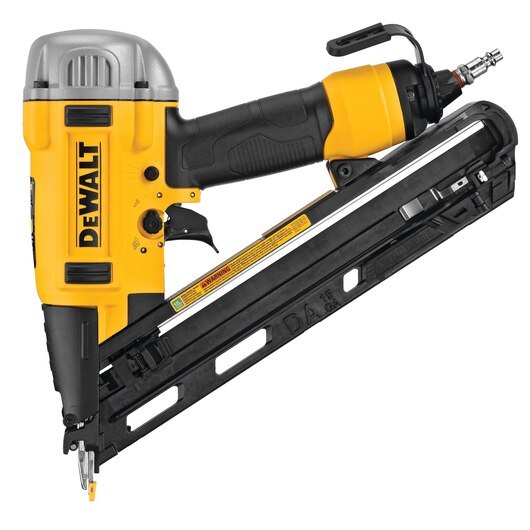
DWFP72155 pneumatic finish nailer. Product image: DEWALT.
DEWALT lists the DWFP72155 for 15-gauge DA-style finish nails from 1¼ to 2½ inches. Its operating range is 70–120 psi. The standard package includes a fitting, carrying case and sample no-mar tips; it does not supply the compressor and hose that make it work. ⓘ Affiliate link — I may earn a commission from qualifying purchases, at no extra cost to you.
Check the compressor’s delivered airflow as well as its pressure. The manual specifies 1.8 cfm at 80 psi for a rate of 60 fasteners per minute. That is a sizing condition, not a promise about how fast you’ll install ceiling boards. Compare the compressor’s rated delivery at the relevant pressure with the work you expect it to support.
Before buying the air gun, I’d work out where the compressor can sit, how it gets power and where the hose will run. A compressor in the room isn’t much help if the hose keeps catching on the way to your hand.
DCN650B: tool only means the battery is another purchase unless you have one
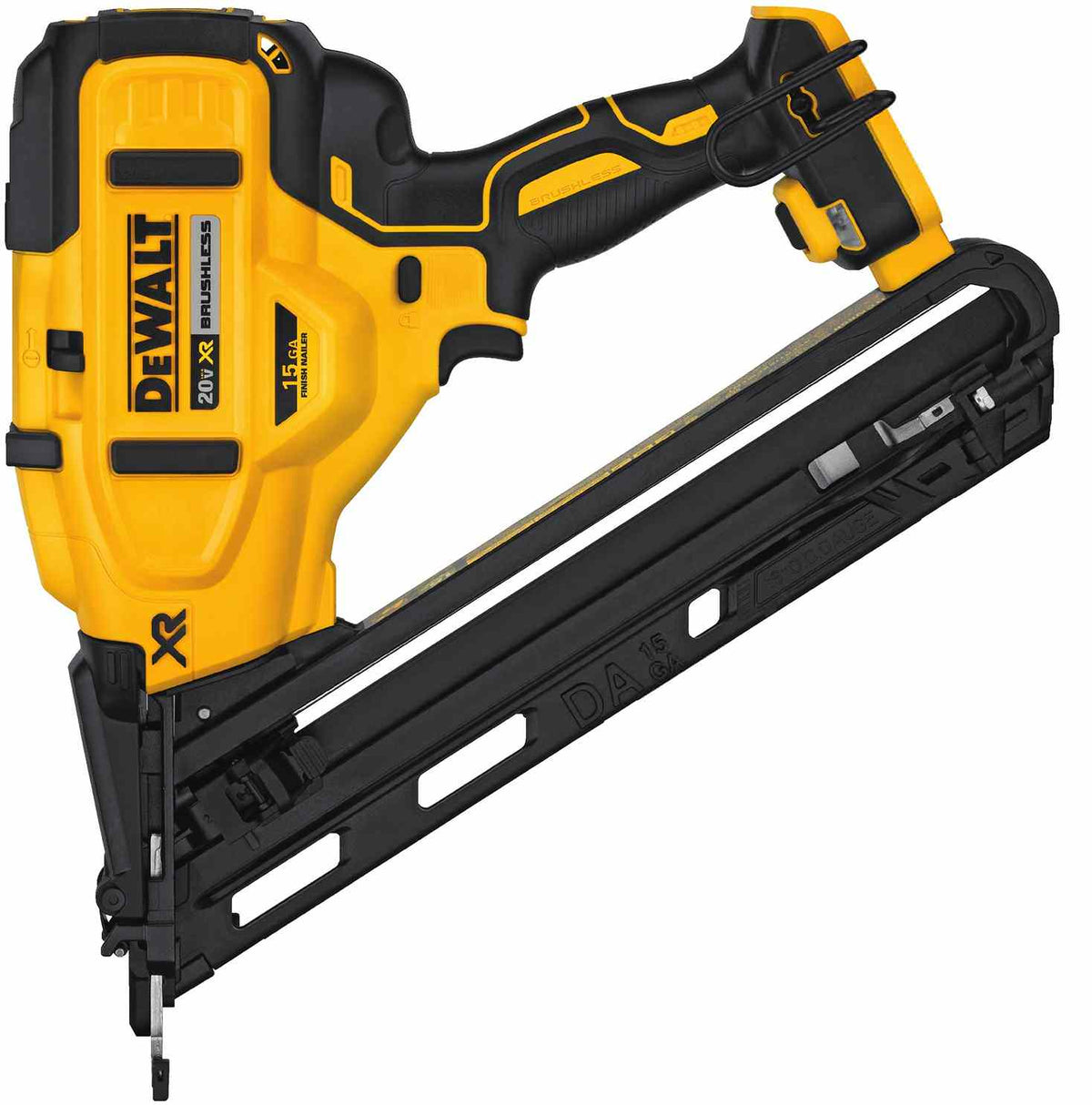
DCN650B tool-only cordless finish nailer. Product image: DEWALT. Battery and charger are separate.
The DCN650B runs on the DEWALT 20V MAX battery system. It removes the compressor, hose and gas cartridge from this nailer’s setup. The B package does not include a battery or charger. ⓘ Affiliate link — I may earn a commission from qualifying purchases, at no extra cost to you.
If you already have compatible batteries, check that one will be available while your other tools are working. A battery assigned to the saw is not automatically a spare for the nailer. If you’re buying from zero, compare a complete battery-and-charger purchase with the complete air purchase. The DCN650D1 kit adds battery-and-charger equipment; the DCN650B listing is for the tool only. Check the included-items list on the package you buy.
I’d make two lists. What’s already on hand, and what does this purchase add? Don’t charge yourself twice for a compressor you already use. Don’t leave a charger off the cordless list because it wasn’t in the product photograph.
For the rest of a ceiling job, my whole ceiling tool and setup plan puts the nailer alongside the other work that needs staging.
The Rule of Thumb I Follow: Count everything a purchase makes you carry, connect, and keep running — not just the gun in the box.
What changes when the work moves overhead?
Baseboard is down at the floor. A ceiling puts the gun above you, with a board to support and a platform or ladder that has to be in the right place. I’d pick the gun up in that working position before deciding the setup suits me.
DEWALT’s DWFP72155 manual lists the tool at 4.22 pounds. The DCN650 manual lists 5.8 pounds without a battery. These figures describe the tools; neither includes the whole working setup. The cordless gun needs its actual battery installed; the pneumatic gun needs its air connection and a hose route that doesn’t pull or snag. Neither number tells you how the gun will balance in your hand above shoulder height.
For a long ceiling run, I’d compare the reach from a suitable platform, the space around the nose and how the air line can be kept clear as the work moves. For a few repairs in separate rooms, I’d count what needs to be carried in and connected each time. Same guns. Different reason to choose one.
Don’t buy cordless expecting it to fix an awkward reach. Use suitable access equipment, maintain stable footing and follow the tool instructions when changing position. The DWFP72155 manual specifically requires disconnecting the air supply when moving between work areas involving ladders, stairs or scaffolding. A hose-free gun still needs safe handling when you move.
Before buying the gun, settle the work setup. The free T&G Project Starter Guide below helps you put the material, tools and planning decisions in one place.
Nose access, depth control and interruptions: the details that matter
Both nailers have tool-free depth adjustment and jam-release provisions. The DWFP72155 uses DEWALT’s Precision Point nose; the DCN650 has a micro nose, diagnostic lights and a stall-release lever. Useful features, yes. They don’t tell me which gun will get onto a tight fastening point, and they don’t prove one jams less.
Before committing to either, I’d want to check the actual fastening position: the tongue or trim face, the board next to it and the space the tool body needs. Seeing the tip is only part of it. The body still has to fit without making you turn the gun away from the fastening position.
Use offcuts of the real material over representative backing for setup checks, with the specified fasteners and the manufacturer’s operating procedure. Check where the nail enters and how the head seats. A depth wheel is an adjustment, not permission to bury a head through a tongue or keep firing when the assembly is wrong.
The pneumatic manual specifies DA-style 15-gauge nails; the cordless manual specifies 15-gauge nails at 34 degrees. Both cover the 1¼–2½-inch range. “15 gauge” alone is not a buying specification. Match the nail style, angle, collation and length to the exact gun’s instructions, then match length, coating and placement to the boards and backing. If the gauge itself is unsettled, go back to the 15-gauge versus 16-gauge decision before buying either gun.
A jam is also where the power source changes the procedure. On the DWFP72155, disconnect the air supply before clearing; follow the manual’s unloading, pusher and nose-latch instructions. Its maintenance warning calls for removing fasteners before adjustments. Keep the nose pointed away from yourself and others. The DWFP72155 manual supplies the complete sequence and operation check.
On the DCN650, remove the battery, engage the trigger lock-off and unload before opening the nose. The stall-release lever has a separate job when the driver is stuck down; it isn’t a reason to force the mechanism or keep cycling the tool. Follow the DCN650 manual. With either gun, repeated jams call for authorized service. Tool-free access doesn’t mean power-connected access.
When I would keep air—and when I would pay for cordless
Air is already staged and the hose route works
I’d stay with the DWFP72155 if it fits the required nails and the air equipment is practical for the work. A capable existing setup doesn’t need replacing because a cordless listing looks convenient.
You still have the compressor, the air supply and the hose to deal with. If those aren’t causing a real limitation, I wouldn’t turn them into a reason to spend money.
Repeated moves make the hose the problem
I’d lean toward the DCN650B when room changes, separate repairs or access arrangements repeatedly turn the air setup into extra work. That gives the purchase a job: get the air line and compressor setup out of this part of the work.
The trade is carrying the gun with its battery and keeping compatible batteries charged. Put the battery on it and pick it up. That’s the tool you’ll be holding overhead.
Everything has to be bought for one project
I wouldn’t pick a winner from the gun prices alone. Compare the complete systems and what you expect to use after this job. Existing compatible batteries can favor the DCN650B purchase; an air setup you will use for other work can favor the DWFP72155 purchase.
If a suitable setup can be borrowed or rented for the project, put that beside the purchase cost too. One ceiling is not much of a reason to buy a whole setup you won’t use again.
The final checks before you order
- Confirm DWFP72155 pneumatic or DCN650B tool only on the listing and included-items list. A kit photograph is not the package description.
- Check the exact fasteners against the gun’s instructions and your board/backing assembly.
- Count the air equipment or compatible battery and charger you still need.
- Judge handling with the actual working connection or battery, not a bare-tool number alone.
- Check the current seller, condition, included items and return terms.
- Name the problem the purchase solves. If your current setup already handles it, keep using it.
ToolBoxBuzz’s review below shows the DCN650B gun in its D1 kit form. It’s another look at the cordless tool, not a controlled comparison with the DWFP72155 or a demonstration of either gun on your ceiling assembly.
Video: ToolBoxBuzz. DCN650B shown in D1 kit form; the kit’s included equipment differs from the B tool-only package.
Choosing the gun is one part of the job. My Master Tongue and Groove—Without Regret Handbook carries the planning through the installation sequence, including the checks that need to happen before fastening starts.
Want the full tongue and groove install order in one place?
I put the layout checks, prep work, tool judgment, fastening sequence, and common mistake fixes into one practical PDF handbook so you are not guessing your way through the job.
For this pair, I’d keep practical air when it already works and pay for cordless when losing the hose removes a recurring problem. Make it solve something.