DEWALT vs Milwaukee 18-Gauge Brad Nailer: Which Fits Trim Work Better?
If you’re comparing the Milwaukee 2746-20 and DEWALT DCN680B 18-gauge cordless brad nailers, I’ve used both. DEWALT was my everyday gun before I switched. Now Milwaukee is the one I reach for. The biggest difference for me isn’t the color or a specification on the box. It’s how the gun responds when I’m working.
My pick is the Milwaukee 2746-20. Its firing feels closer to an air nailer, without the little wait I notice with the DEWALT. But if you already own DEWALT 20V MAX batteries and the work is ordinary light trim, the DCN680B can still be a sensible purchase. Neither one is a universal answer for fastening tongue and groove ceilings.
Affiliate disclosure: As an Amazon Associate, Tongue & Groove Tools earns from qualifying purchases. If you buy through an Amazon link in this article, I may earn a commission at no additional cost to you. My recommendation is based on my own use of these two models.
Which one should you buy?
My quick buying rule: Choose Milwaukee 2746-20 if you do frequent light-trim work, prefer the quicker firing response I feel in use, and especially if you already own M18 batteries. Choose DEWALT DCN680B if you have 20V MAX batteries, need a capable cordless brad nailer, and would rather keep your existing platform than pay to switch. Both are tool-only choices here, and neither replaces choosing the right fastener for the job.
Milwaukee 2746-20 — my pick for regular trim work
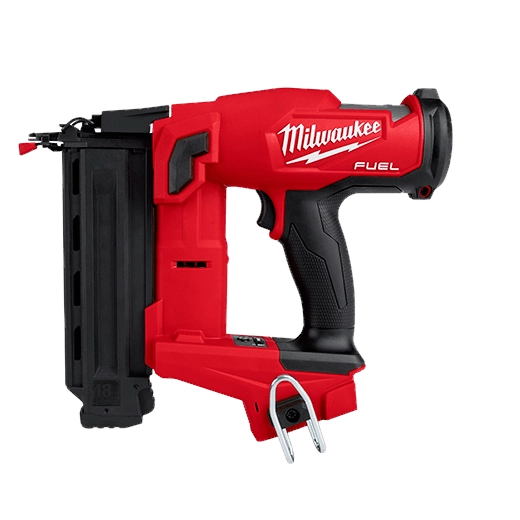
If I were buying one of these two for regular 18-gauge trim work, I’d buy the Milwaukee. The trigger response is what sold me. I pull the trigger and the brad goes in. There isn’t that little wind-up I notice on the DEWALT. Milwaukee describes this model as having zero ramp-up time; that lines up with how it feels in my hands. It is still a cordless tool with a substantial head, and it won’t magically get into every tight inside corner.
Check Milwaukee 2746-20 price and availability on Amazon ⓘ
Affiliate link — I may earn a commission from qualifying purchases, at no extra cost to you.
This is the tool-only model; account for an M18 battery and charger if you do not already own the platform.
DEWALT DCN680B — the practical choice for a DEWALT battery owner
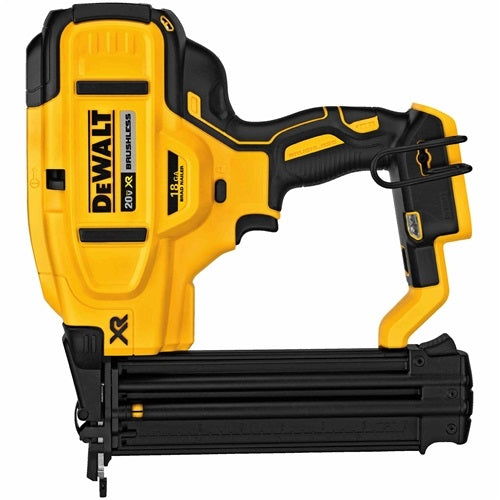
I used the DEWALT before I changed over. It did the work, and I wouldn’t throw a working one in the corner just because my preference changed. What I didn’t like was the noticeable ramp-up before the nail fired. I also seemed to deal with more jams using mine than I do with the Milwaukee. That’s my experience with the guns I handled, not a controlled reliability test.
If you already have DEWALT 20V MAX batteries, that matters. Starting a second battery system adds expense and extra chargers. Compare the complete setup you actually need, not just the bare-tool sticker. I wouldn’t tell a DEWALT owner to buy a new battery platform without a good reason. The DCN680B gives you cordless convenience and has a tool-free jam release and a separate stall-release lever. Buying it may make more sense than changing your whole setup just to match my preference.
Check DEWALT DCN680B price and availability on Amazon ⓘ
Affiliate link — I may earn a commission from qualifying purchases, at no extra cost to you.
This is also a tool-only option; battery and charger are separate.
What I notice once the trim work starts
The firing response is the difference I notice most
An air nailer answers the trigger without making me wait. That’s the feel I like when I’m moving along a run of baseboard or casing. Milwaukee gets much closer to that immediate response for me. The DEWALT’s little wind-up doesn’t keep it from fastening trim, but I can feel it. After a full day, those little interruptions start to bother me.
Milwaukee uses a sealed nitrogen air-spring mechanism for this model. DEWALT uses its battery-powered brushless drive system. Those are manufacturer descriptions. The judgment about which feels better is mine.
Neither gun is small at the nose
Both have bulky heads compared with a small pneumatic nailer. Put either one close to an inside corner or a tight return and you sometimes have to turn your wrist or change your angle to reach the fastening point. DEWALT advertises a micro nose for better sightline compared with an older DEWALT model, but that doesn’t make my DCN680B as nimble as every pneumatic gun. I want buyers to know that before they buy cordless expecting every awkward corner to get easier.
A jam can stop the job, and service takes time
On either nailer, a bent or poorly seated brad can jam near the driver and guide. The tool-free releases help, but some jams are stubborn. Remove the battery and follow the specific manufacturer’s clearing instructions. Don’t poke around the firing mechanism with power connected or force it apart. Stop and consult the manual if the driver remains stuck.
These battery nailers are convenient until one needs service. In my experience, pneumatic guns are tougher to abuse and generally easier to get repaired. A cordless repair that ties the gun up for a couple of weeks is a real problem if that is the tool you make a living with. That doesn’t mean either model will fail on your job; it means service and having a backup matter.
The Rule of Thumb I Follow: Pick the nailer for the fastener and the work, not for the badge on the battery. If it holds the trim properly and doesn’t fight you all day, that’s the setup worth keeping.
Why I still choose cordless instead of a hose
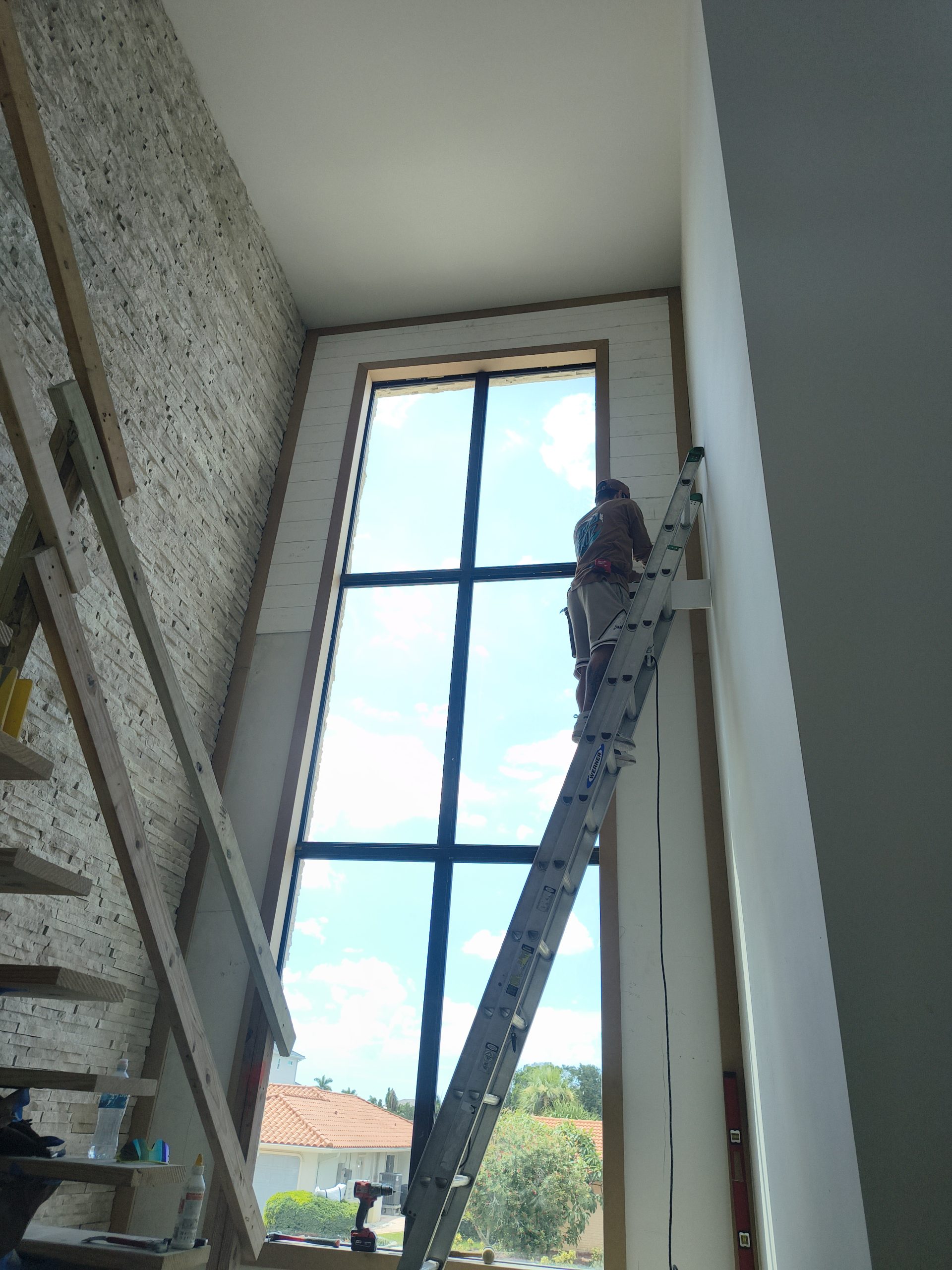
This is where cordless earns its place. On a ladder or scaffold, I don’t want an air hose tugging at my hand while I’m also handling a board overhead. Across rooms, the hose catches at doorways and outside corners. For a small repair, I can grab the gun and a strip of nails instead of staging the compressor and dragging a hose through the house.
A pneumatic nailer can still win on purchase cost, lower hand weight, and simpler repairs in my experience, especially if the compressor is already set up for the job. If you run a shop or already have an air line out, the cordless convenience may not earn back the extra battery-tool cost. I wouldn’t buy cordless just for the sake of owning cordless. I use it because the lack of a hose removes aggravation from the work I actually do.
Make sure 18 gauge is right before picking a brand
These are 18-gauge brad nailers, not 15-gauge finish nailers. For light molding, shoe, small trim and some detail fastening, an 18-gauge brad can be the right fastener. Both listed tools handle 18-gauge brads in the published 5/8- to 2-1/8-inch range.
For tongue and groove ceilings where stronger holding power is needed, I usually lean toward a 15-gauge finish-nailer setup. That’s a field preference, not permission to disregard the material maker. Fastener gauge, length, placement, backing and board profile must suit the actual assembly. Do not buy an 18-gauge gun because a comparison says it’s the winner, then assume it can hold every ceiling board.
For a broader view of the tool kit and the jobs that decide which tool belongs in it, read the essential trim carpentry tools guide. If ceiling fastening is your job, start with the 15-gauge ceiling nail-gun guide instead of forcing one of these brad nailers into the wrong work. For a broader look at what to own before buying another gun, see the nail-gun guide for DIY projects.
Video: “BEST 18 Gauge Cordless Brad Nailer — Head-To-Head,” Concord Carpenter / Tool Lab. Their testing is separate from my own experience and does not substitute for choosing the correct fastener for your work.
Want the full tongue and groove install order in one place?
I put the layout checks, prep work, tool judgment, fastening sequence, and common mistake fixes into one practical PDF handbook so you are not guessing your way through the job.
What I’d spend my money on
Milwaukee 2746-20: I’d pick it for frequent light-trim jobs, especially if firing response matters and I’m already using M18 batteries. It’s my regular go-to for this kind of work.
ⓘ Affiliate link — I may earn a commission from qualifying purchases, at no extra cost to you.
DEWALT DCN680B: I’d keep it on the list for someone invested in DEWALT batteries who wants a capable cordless 18-gauge brad nailer and doesn’t mind the firing feel as much as I do.
ⓘ Affiliate link — I may earn a commission from qualifying purchases, at no extra cost to you.
Already own a working nailer that handles your fastener and trim without trouble? Use it. I wouldn’t spend money replacing a good tool just to agree with my preference. But if you’re shopping between these exact two, I’d take the Milwaukee. That’s where I landed after working with both. Your battery setup and the work in front of you still count.