
Tongue and Groove Ceiling: The Complete Guide for Homeowners
Tongue and Groove Ceiling: The Complete Guide for Homeowners
A tongue-and-groove ceiling is one of those upgrades that can make a room feel warmer, better finished, and more intentional almost immediately. It can also frustrate homeowners who underestimate how much the room itself shapes the job. The ceiling is not just a decorative surface. It is a system of lines, transitions, fasteners, cutouts, access challenges, and maintenance realities.
If you need another angle on this part of the job, read Transform Your Space: A Comprehensive Guide to Tongue and Groove Ceiling Installation.
So this complete guide is not only about how to install one. It is about how to think about one before you buy material, before you commit to the look, and before you decide whether the job belongs in your own hands or in a carpenter’s truck.
Homeowners usually need this kind of page because they are not only asking ‘how hard is it?’ They are really asking ‘what am I getting into, what tools matter, and what parts of this project tend to surprise people?’
Gage’s Rule of Thumb: On tongue-and-groove ceiling work, I trust the layout and access setup before I trust any fast fix. If the starter line is honest and your footing stays stable, the whole ceiling usually gets easier to control.
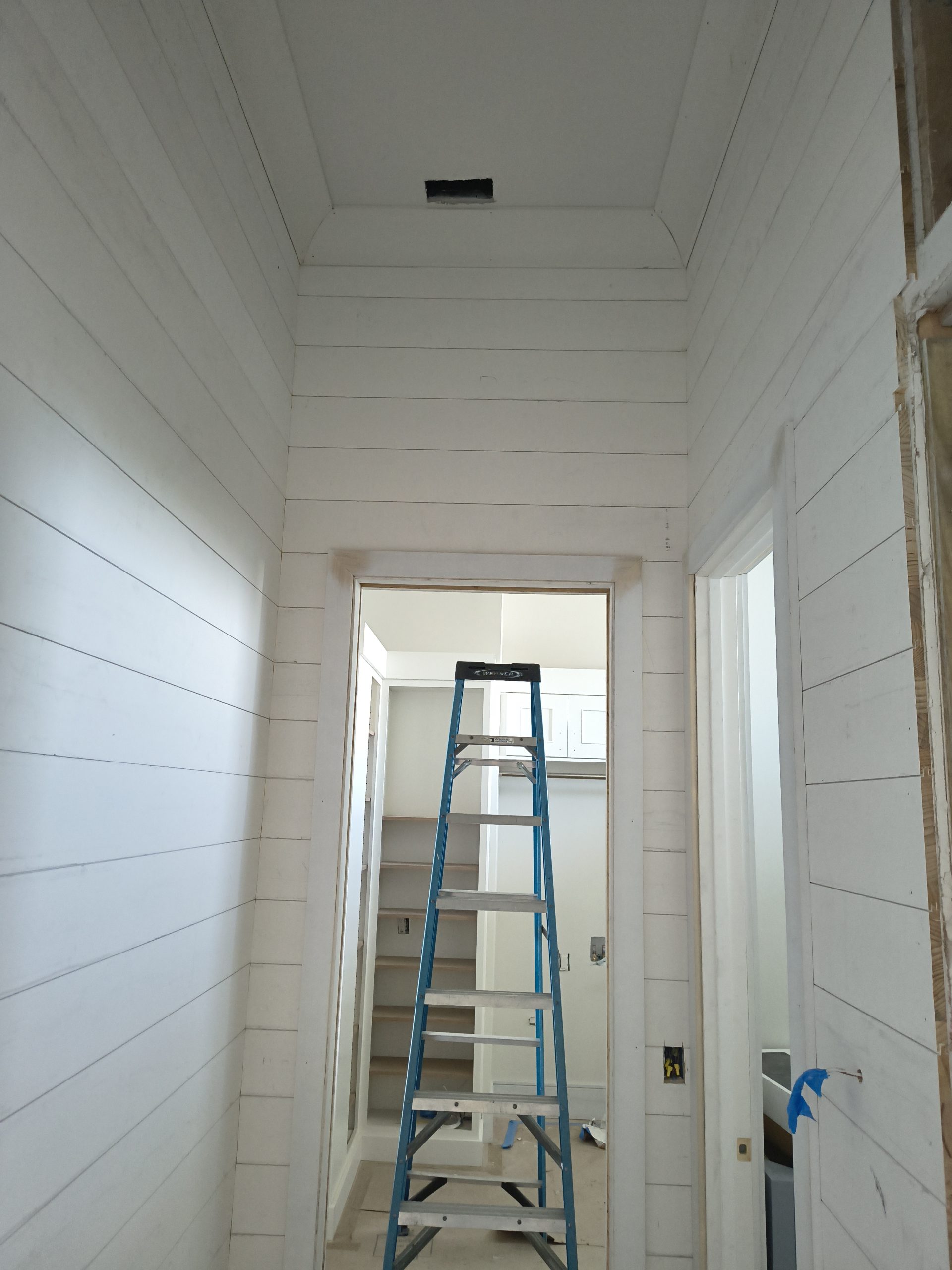
What a tongue-and-groove ceiling actually is
For a related comparison, see Tongue and Groove Ceiling Installation Tools: A Comprehensive Guide.
At its simplest, it is a finished surface made from boards that lock together with a tongue on one edge and a groove on the other. That interlock helps the surface read as one clean field instead of a patchwork of visible fasteners. Homeowners like the look because it can feel classic, warm, rustic, coastal, cottage, or clean depending on the board size, species, finish, and room around it.
But the system does not forgive lazy prep. The boards still depend on a sound substrate, a smart layout, and a clear plan for how the room is going to handle lights, vents, beams, and transitions.
Where tongue-and-groove ceilings make sense
They work well in living rooms, porches, bedrooms, cabins, hallways, and bonus rooms where the ceiling deserves to be read as part of the design. They can also work in moisture-prone areas if the material choice and finish strategy match the environment. The wrong choice is usually not the ceiling style itself. It is the mismatch between the room conditions and the board or finish selection.
That is one reason homeowners should think beyond the boards themselves. The room conditions, access, trim package, and maintenance tolerance all matter to the final answer.
What tools matter in a homeowner guide
A homeowner does not need every pro-grade tool in the catalog to understand the project. But it helps to understand what kind of kit the job normally leans on. A tape and distance measurer help with room truth. A chalk line keeps layout readable. A miter saw and drill handle the predictable work. A utility knife, respirator, and hearing protection point to the cleanup, insulation, prep, and safety side of the job that homeowners often forget to budget emotionally.
Notice what is not on that list: gimmick tools pretending to do the thinking for you. A ceiling still depends on measured planning and honest sequencing.
The broad homeowner tool set
- Milwaukee 48-22-0225 Tape Measure: Still the first tool because insulation planning starts with spans, depth, and actual room dimensions, not guesses.
- Bosch GLM20 Laser Distance Measurer: Useful for quick checks across larger rooms where repeated span verification saves ladder trips.
- Stanley 47-099 Metal Chalk Line Reel: A metal chalk reel gives you crisp reference lines that stay visible while you work across the room.
- Ridgid R4251 12in Sliding Miter Saw: Ridgid is the value 12-inch lane when the budget still matters and capacity is real.
- Makita XFD131 Drill Driver: Drills pilot holes and handles assembly work without making small projects feel overbuilt.
- Milwaukee Fastback Utility Knife: Cuts insulation cleanly and trims odd details without shredding material.
- Platform/Scaffold: A stable platform or scaffold keeps the whole install under control better than dancing on a ladder all day.
- 3M N95 Respirator: Dust, insulation fibers, and sanding debris are not something to breathe on purpose.
- 3M Peltor Ear Muffs: Loud saws and nailers stack up on your hearing faster than most DIYers think.
- Newborn 250 Caulk Gun: Useful when the repair calls for a clean bead in trim transitions or controlled gap treatment.
The real project phases homeowners should expect
- Planning: measuring the room, picking board direction, deciding on finish, and thinking through cutouts.
- Preparation: fixing substrate issues, clearing obstacles, staging material, and confirming how you will work overhead.
- Installation: starting clean, keeping lines honest, cutting carefully, and fastening with control.
- Finish work: trim, caulk where appropriate, touchup sanding, and visual cleanup.
- Maintenance: occasional inspection, cleaning, and prompt response to movement or moisture trouble.
Each of those phases affects cost, fatigue, and quality. That is why a complete guide has to do more than describe the look of the finished ceiling.
Common homeowner mistakes
The biggest homeowner mistake is assuming the finished boards will somehow straighten a crooked plan. They will not. Another common problem is underestimating overhead fatigue and access. People also get trapped by the false idea that finish materials will hide weak cutouts or layout drift. In reality, a tongue-and-groove ceiling looks best when the corrections start early, not late.
Another mistake is pretending maintenance does not exist. Moisture, seasonal movement, and finish wear are easier to manage when the homeowner already understands what normal change looks like and what real trouble looks like.
Should you DIY it or hire it out?
That depends on the room, your comfort overhead, the number of cutouts, the quality of your staging, and how much finish quality matters to you. A simple room with clear walls and good access is very different from a room with vaults, beams, recessed lights, and multiple transitions. The complete-guide answer is not always ‘do it yourself’ or ‘always hire it out.’ The honest answer is that complexity and visibility should decide.
For some homeowners, the right move is to DIY the simpler room first and hire out the high-visibility room later. For others, the planning work is enjoyable but the overhead repetition is where a carpenter earns his money.
What to watch after the install
Watch for movement around seams, seasonal gaps, finish wear, staining from leaks, and trim transitions that start telling on the room. A tongue-and-groove ceiling is not high drama once it is in, but it does reward prompt attention when moisture or movement shows up.
The good news is that a properly planned and installed ceiling usually ages well. That is another reason the guide keeps coming back to prep and sequence. Longevity is mostly built before the last board ever goes up.
Bottom line
For homeowners, a tongue-and-groove ceiling is a design choice, a project, and a maintenance responsibility all at once. The more honestly you understand the room, the tools, the work sequence, and the long-term care, the better the final result tends to look.
Related reads
- 5 Best Tools for Tongue and Groove Ceiling Installation
- Top 10 Tongue and Groove Nail Guns for DIY Enthusiasts
That’s it for today, folks. Hope this helps you with your projects. Enjoy the day. I’ll see you on the next one.