
How to Easily Install a Tongue and Groove Ceiling in Your Home
A homeowner-friendly way to get the job done
Putting up a tongue and groove ceiling is one of those projects that looks bigger than it really is. The room is overhead, the boards can be awkward, and the first glance makes it feel like you need a full professional crew. In reality, a homeowner can get a very good result by slowing the job down and handling it in the right order.
For another practical comparison, see Step-by-Step Guide: Installing a Tongue and Groove Ceiling.
If you want a related angle on this, read Transform Your Space: A Comprehensive Guide to Tongue and Groove Ceiling Installation.
Rule of Thumb: A homeowner ceiling turns out cleaner when the starter course is straight, the joints are checked dry, and you stop before a bad board gets buried overhead.
Need the full tongue-and-groove install sequence?
I put the planning, setup, layout, fastening, trim, mistakes, and checklists together in one PDF handbook so you are not piecing the job together one tip at a time.
The goal is not to turn your house into a production set. The goal is to prepare the room, control the first few boards, and use a tool set that is realistic for a do-it-yourself install. Once you stop trying to rush, the project becomes a series of manageable steps.
This guide keeps things simple on purpose. You do not need a circus act. You need board support, clean cuts, sensible fastening, and a willingness to fix the small problems before they stack up.
Before you lift the first board, decide where the eye goes when you enter the room. That is usually the wall or direction that deserves the cleanest first line. Measure the room, snap a reference line, and check how wide the last course is likely to be. If the final strip will be miserable, cheat the first courses so the finish looks intentional.
This is a better use of time than trying to correct the layout after several rows are already overhead.
Keep the material manageable
Long boards look great but they also turn simple overhead work into a balancing act. If you are working alone or with limited help, set up stable support before you start. Sawhorses at the right height and a clean staging area matter more than another flashy tool purchase.
Acclimate the material in the room and sort boards before install. Put the straighter, cleaner boards where the eye lands first and save shorter or more character-heavy pieces for less visible areas when appropriate.
Use a simple, practical tool kit
A Stanley FatMax 25′ earns its keep here because it helps keep the work honest before a small mistake starts spreading through the whole job.
You also feel the value of a Stanley 47-140 FatMax Chalk Line Reel when the fit tightens up and you need control instead of forcing the material.
A tape, chalk line, miter saw, 15-gauge finish nailer, utility knife, and a good square will handle most of the real work. The support gear and the mallet do more for the pace of the job than people think because they keep you from fighting every board overhead.
The point here is not to own everything. It is to own enough to work accurately and safely.
Install one row like it matters, because it does
The first course controls the room. Get it straight, make sure it is seated properly, and do not move on until you trust it. A homeowner install stays clean when the early rows are honest. If the start drifts, the rest of the ceiling becomes a cover-up.
Seat each board carefully with a mallet, not force. If the tongue and groove are not mating cleanly, stop and inspect the board. Trimming a burr or rechecking a cut is faster than beating damaged stock into place.
Work around obstacles without making a mess
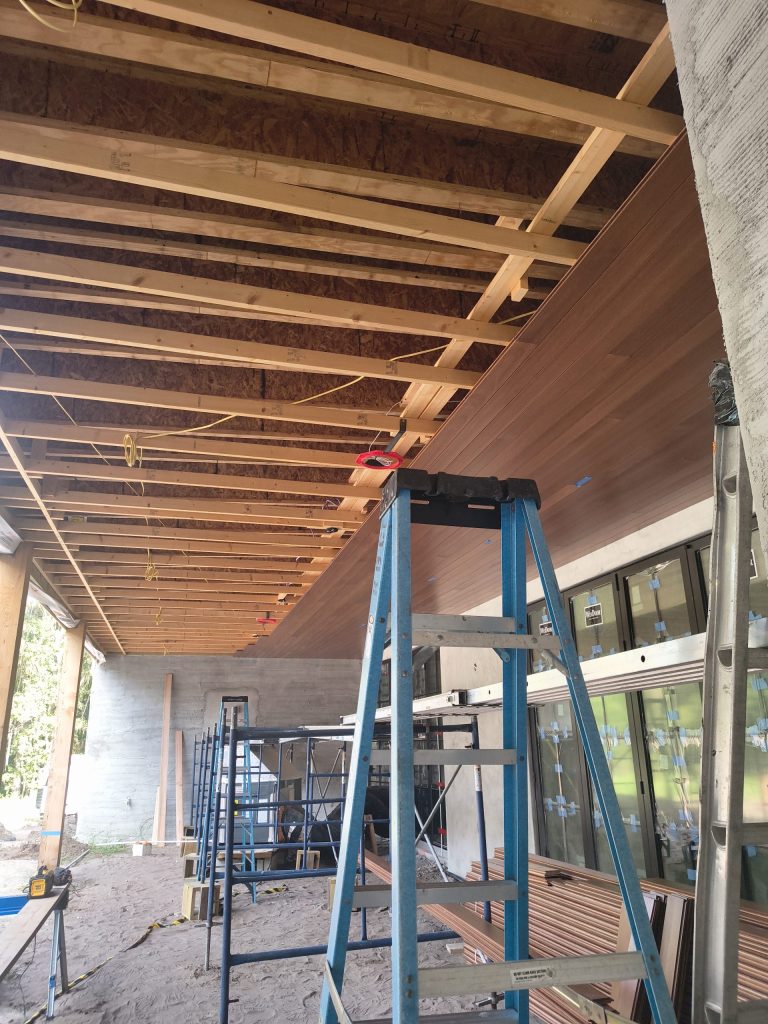
Light boxes, vents, and corners are the places where patience pays off. Mark carefully, cut deliberately, and test fit. A utility knife is useful for cleanup and small adjustments around cut edges where a saw would be too aggressive.
If you need trim, treat it like trim. A ceiling may be overhead, but sloppy returns and ragged edges are still obvious.
Finish the job like a homeowner who wants to stay proud of it
Once the field is complete, go back and clean the work. Remove pencil marks, check for weak spots, and decide whether the room needs paint, stain, or clear finish. For many homeowners, this is where the project finally stops feeling like construction and starts feeling like part of the house.
That is also the right time to check the room from multiple viewpoints. Small imperfections that were invisible from the ladder can show up immediately from the doorway.
Maintenance is easy if the install was done right
A tongue and groove ceiling does not need much day-to-day attention. Dust it occasionally, keep an eye on joints in seasonal humidity swings, and touch up the finish when the room tells you it needs it. Good prep and a careful install do most of the long-term work for you.
That is why it is worth staying disciplined during installation. The better the boards are seated and the cleaner the finish details are, the less annoying the ceiling is to own later.
The bottom line
A homeowner can absolutely put up a tongue and groove ceiling without turning the job into a circus. The formula is simple: sensible layout, stable support, manageable tools, careful board handling, and enough patience to solve problems early. Do that, and the room gets the warmth and character you wanted without the sloppy clues that the job was rushed.
What makes this version of the job easier for homeowners
A homeowner-friendly install is not one with fewer steps. It is one where the steps are understandable, the tools are manageable, and the setup reduces bad decisions. That is a huge difference.
You do not need to copy a production crew to get a ceiling that looks good. You need to keep the room organized, keep your measurements honest, and handle the boards carefully enough that the joints stay clean.
It also helps to stage the project in sessions. Prep and planning one day, primary install on another, and finish details after that is often better than trying to force the entire room through in one tired push.
Good support gear matters here because the more stable the board handling is, the less likely you are to damage an edge, miss a cut, or start making rushed decisions overhead.
A few last homeowner rules worth remembering
If a board is wrong, stop. Trim it, swap it, or reset it. Pride is cheaper than pretending a bad fit will disappear once the room is painted or the lights are dim.
And remember that the ceiling does not need to go up fast to look good. It needs to go up straight, clean, and calm. That is the standard worth chasing.
Related reads
- Tongue and Groove Ceiling: The Complete Guide for Homeowners
- Top 10 Tongue and Groove Nail Guns for DIY Enthusiasts
That’s it for today, folks. Hope this helps you with your projects. Enjoy the day. I’ll see you on the next one.