Cabinet Making: A Comprehensive Guide to Mastering the Craft
Cabinet making is one of those jobs where small errors keep charging interest. If the box starts square, shelves, doors, drawers, face frames, and installation all get easier. If the box starts crooked, every later step becomes correction work.
The job is really a chain of decisions: size the cabinet for the space, break panels down from consistent references, keep the carcass square, plan hardware before it traps you, and finish in an order that does not create extra work. This guide stays at that practical workflow level instead of pretending one cabinet plan fits every project.
Cabinet work starts before the first cut
Before the cuts start, the cabinet needs a plan that accounts for overall size, wall conditions, material thickness, hardware choice, and how the cabinet will actually be assembled. That planning step is not optional. It is the difference between straightforward build steps and avoidable rework.
The same goes for shop setup. If sheet goods have nowhere safe to land and parts have no labeling system, cabinet work gets messy fast. Order matters here as much as tool quality.
If you are still deciding what kind of project is worth the effort, the woodworking designs guide is the better place to compare project direction before cabinet dimensions start locking you in.
Rule of Thumb: Cabinet work goes sideways fast when the parts are close instead of dead-on. Small errors stack up from the case to the shelves, doors, drawers, and face frame. Get the box square early, or every part after that turns into correction work.
Panel breakdown and dimensioning set the tone
Many cabinet problems start in the breakdown phase. Panels get chipped, dimensions drift, and the worker starts trimming each piece independently until the project loses a common reference. A controlled breakdown system prevents that slide.
Once the rough pieces are down to size, the process should get even stricter. Label parts, verify reference edges, and keep the dimensions tied back to the plan instead of relying on memory.
Tools that keep cabinet work honest
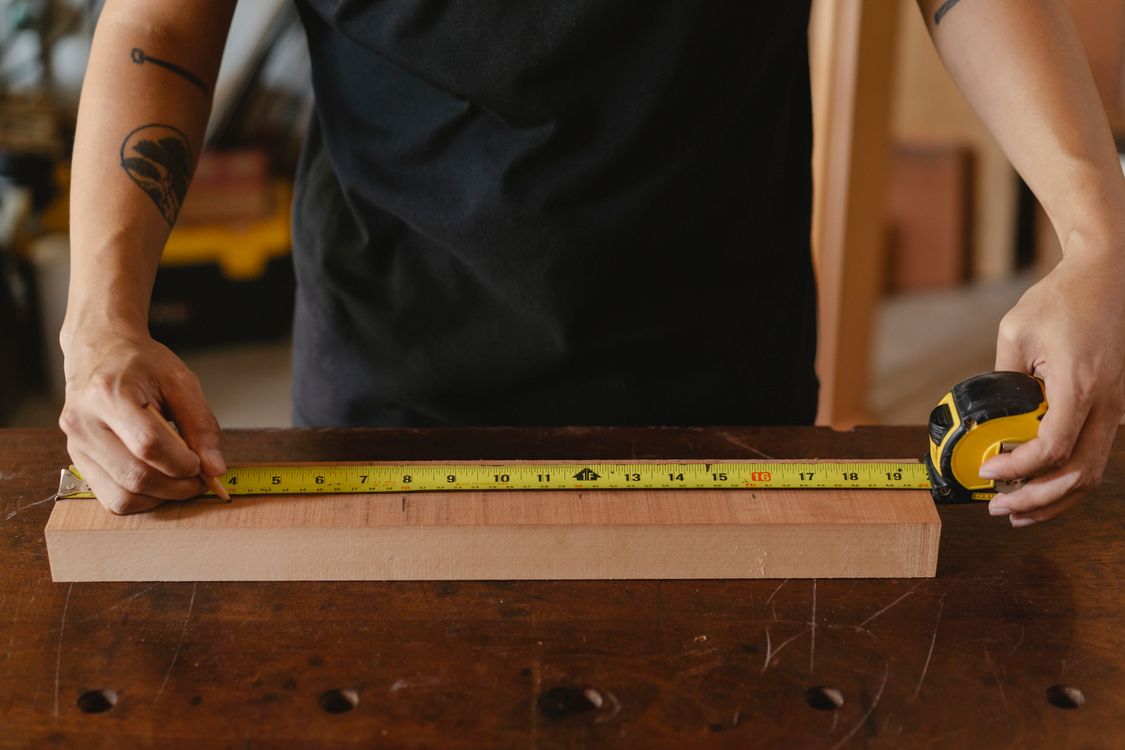
Cabinet work does not need every tool in the catalog, but it does need tools that help control accuracy. The right setup helps break down panels cleanly, repeat dimensions, hold parts square, prep hardware, and keep finish surfaces clean.
For a deeper capability-by-capability look at those roles, use the woodworking tools guide. The point here is not the brand on the tool. It is whether the setup helps you repeat a dimension and keep the box honest.
- Track saw: Useful for breaking down cabinet panels accurately before assembly starts.
- Table saw: Takes over when repeatable rips, shelves, face-frame parts, and trim pieces need to stay consistent.
- Drill/driver: Handles hardware prep, pilot holes, countersinking, and assembly tasks.
- Brad nailer: Helps with light trim, backs, and temporary holding tasks, but it does not replace proper cabinet joinery.
- Finish nailer: Useful for face frames, heavier trim, and installation work that needs more hold than a brad nailer offers.
- Random orbit sander: Keeps cabinet surfaces ready for finish without leaving marks that show under paint or clear coat.
- Dust collection: Matters because sheet goods, sanding, and inside-case cleanup get ugly fast.
- Reliable square: Cabinet work punishes drift. Once the carcass goes out of square, everything downstream gets harder.
Casework accuracy compounds
Cabinet making rewards small advantages. A carcass that stays square makes face frames easier. Cleaner panel edges make reveals easier. Better pilot-hole placement makes hardware install easier. The work does not improve because of one heroic step; it improves because every step leaks less error.
That is why measuring and checking do not stop after cutting. Confirm squareness during dry assembly. Check diagonals. Test door and drawer openings before the finish work locks the project in.
Joinery choices matter too, but they belong under the same rule: use the joint that keeps the case aligned and buildable. The wood joints guide covers those options without turning this overview into a joinery manual.
Doors, drawers, and hardware are not afterthoughts
A cabinet can be structurally sound and still feel poor if the reveals wander or the hardware is installed carelessly. Doors and drawers are where people read the quality instantly. The gaps need to look intentional, and the movement needs to feel calm and predictable.
That is also why sanding and finish prep matter. Brush marks, paint ridges, dust nibs, and sloppy edge treatment make cabinets feel cheaper than the work that went into them.
Want a practical planning checkpoint before the project starts getting expensive? The free 10-page T&G Project Starter Guide gives you a simple way to think through materials, tools, sequencing, and mistakes before they compound.
Cabinet workflow example: Peter Millard’s Cabinetry Basics video is useful here because it shows the cabinet process as a sequence of controlled decisions rather than a pile of isolated tricks.
Want the full tongue-and-groove install order in one place?
I put the layout checks, prep work, tool judgment, fastening sequence, and common mistake fixes into one practical PDF handbook so you are not guessing your way through the job.
Sheet goods and hardwood need different expectations
Cabinet makers often work with plywood and hardwood in the same project, but the materials do not behave the same. Sheet goods are efficient and stable for boxes. Hardwood brings strength and appearance to face frames, doors, and visible trim. The process should respect those differences instead of pretending one approach fits everything.
When a builder understands where each material shines, the cabinet gets easier to engineer and easier to finish. That decision-making is part of mastering the craft.
Face frames, reveals, and trim deserve planning space
A lot of cabinets look awkward not because the box is weak, but because the reveals and frame details were left to chance. Those visible transitions need as much thought as the hidden joinery. If the proportions are wrong, the eye catches it immediately.
That is why cabinet making rewards mockups, story sticks, and careful measuring around doors, walls, and neighboring cabinets. Visual order matters here as much as structural order.
Cabinet interiors deserve accuracy too
It is easy to focus on the face of the cabinet and forget the inside, but shelves, slide spacing, and interior clearance determine whether the cabinet actually works day to day. Sloppy interior layout creates drawers that bind, shelves that look improvised, and hardware that fights the user.
Cabinet making should never stop at external dimensions. The internal use of the box needs the same level of planning and accuracy as the exterior appearance.
Installation should already be in your head while you build
Good cabinet makers think about the install while the cabinet is still in the shop. They consider how the box will be moved, how it will be leveled, where scribing may happen, and whether there is access for fasteners and hardware once the cabinet reaches the wall.
That mindset reduces unpleasant surprises. It also keeps the build from becoming a beautiful shop exercise that turns into a nightmare during final placement.
Good cabinets can still come from modest shops
A reader does not need an industrial shop to build good cabinets. What they need is a process that controls panel breakdown, protects square during assembly, and respects fit during the final stages. A modest shop with a disciplined worker usually beats a better-equipped shop with weak sequence.
Cabinet making can feel intimidating, but the craft is teachable when the build is broken into honest, controlled steps.
If you want the wider furniture-building context around fit, joinery, and finish sequencing, the furniture-making guide carries that discussion beyond casework.
Quick FAQ
What matters most in cabinet making?
Squareness and sequence. If the case starts square and the work follows a controlled order, the doors, drawers, shelves, and trim have a better chance of fitting cleanly.
Can a cabinet still work if the box is slightly off?
It might work, but every reveal and install step gets harder. A small mistake in the box can show up later as a crooked door gap, a drawer that binds, or trim that needs extra correction.
What helps most with finish quality?
Better prep, cleaner dust control, and more patience between steps. Finish problems usually come from rushed sanding, poor cleanup, or trying to coat over flaws that should have been fixed earlier.
Bottom line
Cabinet making is a craft of accumulated accuracy. Straight panel breakdown, square carcasses, sensible hardware prep, and patient finish work all add up. When the worker respects that order, cabinets start looking professional even in a modest shop.