Craftsman Woodworking Mastery: Unlocking the Secrets of Fine Woodcraft
T&G Accuracy Is the Starting Point, Not the Finish Line
Fine woodworking asks for a different kind of accuracy than installing tongue and groove. On a T&G job, you are moving through a room, working off layout lines, making repeated cuts, correcting for walls that are not perfect, and often doing it from a platform or ladder. At the bench, the pace slows down and the tolerance for accumulated error gets tighter. A small mistake can follow one part into every joint that comes after it.
That does not make your T&G experience unrelated. The habits that keep a tongue-and-groove job clean—honest measurements, one dependable reference, repeatable cuts, good sequencing, and stopping when the work starts drifting—are the same habits that make the jump into fine woodworking easier.
If you want to see those habits in their normal T&G setting first, start with Transform Your Space: A Comprehensive Guide to Tongue and Groove Ceiling Installation.
The Difference Is Where the Error Shows Up
A clean T&G install already requires accuracy. The difference is where the error shows up and how much room you have to absorb it.
On a ceiling or wall, you can work from a snapped control line, manage a crooked room, adjust a perimeter condition, and let trim handle the transition it was designed to handle. Fine woodworking gives you fewer places to hide accumulated error. A leg that is slightly different from the other three, a panel that is not square, or a shoulder cut from the wrong reference can make the entire assembly fight you.
The move into fine woodworking is not about secret tricks. It is about tightening habits you already use and giving small errors fewer places to hide.
Carry One Reference Through the Work
T&G teaches you not to trust the room blindly. You establish a line and keep checking back to it. Fine woodworking takes the same idea and puts it on the workpiece.
Pick the face and edge that will control your layout and keep using them. Do not measure one part from one edge, flip the next part, and then wonder why the assembly starts disagreeing with itself. The goal is to reduce the number of places where small differences can enter the job.
This is one of the biggest shifts in fine woodworking techniques: the reference becomes part of the part itself. Once that reference is dependable, layout, cutting, drilling, and fitting all have the same starting truth.
Rule of Thumb
T&G teaches you to work accurately. Fine woodworking teaches you how expensive “almost accurate” can become.
Repeatability Beats Heroic Measuring
On a T&G job, a repeatable setup is faster and cleaner than reinventing every cut. Fine woodworking pushes that lesson harder.
When several parts are supposed to match, a controlled setup and one reference system are usually more reliable than measuring every piece from scratch. If the first part is right and the setup stays right, the rest of the batch has a much better chance of agreeing.
A Bosch 4100 Table Saw is one governed example from the Tool Matrix that can support repeatable dimensioning. The important part is not the logo. It is using a stable setup and feeding matching parts through the same reference instead of changing the rules halfway through the batch.
Precision Starts With a Dependable Reference
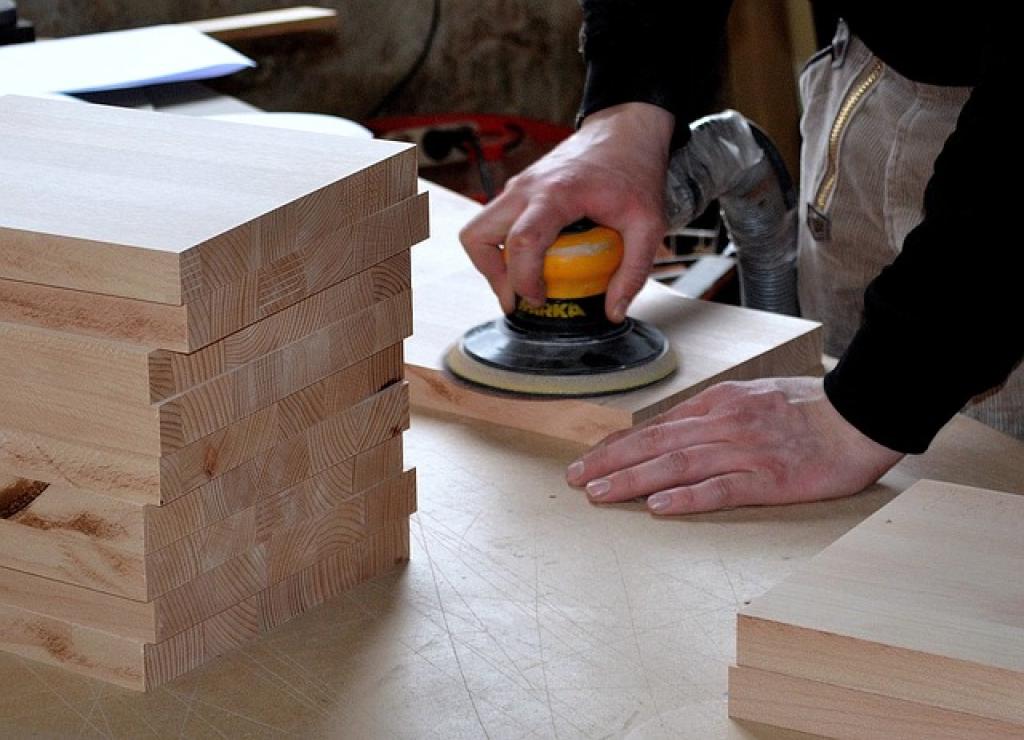
The bench version of layout discipline is simple: establish the reference, mark from it consistently, and do not let every new operation invent a new starting point.
The Math and Layout Habit Transfers Too
T&G layout teaches you to think ahead. You work out board coverage, starter and final-course consequences, obstacle locations, and where an error will land before you bury yourself in installed material.
That same thinking belongs at the bench. Before cutting parts, work out the finished relationships. Which dimension controls the others? Which faces have to stay flush? Which parts need to match one another? Which dimension can be adjusted later and which one will lock the assembly?
The point is not to turn woodworking into a math class. The point is to stop using the finished piece as the calculator.
Fine Woodworking Raises the Standard for Tool Control
A smaller project does not make the tool smarter. It makes your setup and control more important.
With T&G, you learn to let the right tool do the right job instead of forcing every cut through one setup. Fine woodworking adds another layer: setup quality and surface quality become more visible.
A DeWalt DCD791D2 Drill/Driver can handle controlled pilot holes, jigs, and assembly work without turning every fastening task into brute force. A Makita XOB01Z Random Orbital Sander can help with surface preparation, but it should not become a way to sand bad geometry until the parts look close enough. A Milwaukee 2361-20 Work Light is useful because raking light can reveal glue residue, scratches, torn grain, and surface problems before finish makes them obvious.
Those tools are examples, not the lesson. The lesson is that every tool should preserve the reference and fit you already established.
For a deeper tool-system discussion, move to Essential Joinery Tools: A Complete Guide for Woodworking Enthusiasts. This article should not become another tool catalog.
Dry Fitting Turns Confidence Into Evidence
A tongue-and-groove board tells you quickly when the tongue is not seating, the cut is off, or the room is pushing back. Fine woodworking needs the same willingness to stop before permanent assembly.
Dry fit the important parts. Look at the shoulders, reveals, squareness, alignment, and how the assembly wants to move under light pressure. If the parts only fit when you force them, that is information. If one correction creates a new gap somewhere else, that is information too.
Do not let glue become the moment you finally discover what the project is doing.
If the next question is the joint itself—which joint to use and what tradeoffs come with it—that belongs in Mastering Wood Joints Techniques for Perfect Joinery rather than turning this article into another joinery encyclopedia.
Planning a tongue-and-groove project too? The free 10-page T&G Project Starter Guide gives you a practical checkpoint for materials, tools, sequencing, and mistakes before they get expensive.
Where Fine Woodworking Gets Less Forgiving
The biggest difference is not that every dimension suddenly needs some magic number. It is that the parts depend on one another more directly.
A T&G ceiling can have a room condition that gets absorbed at a perimeter. A furniture part may meet another furniture part directly, and the relationship between them is the finished detail. A slightly twisted board, inconsistent thickness, or a layout line taken from the wrong edge can keep showing up until the entire assembly feels harder than it should.
That is why stock preparation matters more. Flat, consistent parts make joinery easier. Clean reference surfaces make layout easier. Matching parts make assembly easier. A properly prepared surface makes finishing easier.
Fine woodworking often feels slower at the front because the goal is to eliminate corrections at the back.
Do Not Carry Field Tolerance Blindly to the Bench
Field work teaches you how to make a real room look right even when the room is not right. That is valuable. The same correction mindset can become a bad habit at the bench if every small problem gets solved by trimming, sanding, filling, or persuading the next part.
Sometimes the right move is to stop and remake the part. Sometimes the setup is wrong. Sometimes the reference changed. Sometimes the stock itself is the problem.
The higher level of craftsmanship is not never making a mistake. It is recognizing early when a correction will preserve the work and when it will only hide the error long enough to move it downstream.
See Repeatability Built Into the Setup
Video credit: YouTube creator.
Want the full tongue-and-groove install order in one place?
I put the layout checks, prep work, tool judgment, fastening sequence, and common mistake fixes into one practical PDF handbook so you are not guessing your way through the job.
A Simple Fine-Woodworking Sequence
- Choose stock that is appropriate for the part.
- Establish the reference face and edge.
- Bring matching parts to consistent dimensions.
- Lay out from the same references.
- Make repeat cuts from controlled setups.
- Dry fit before permanent assembly.
- Correct the cause of a bad fit instead of chasing the symptom.
- Prepare surfaces before finish has a chance to expose what you missed.
That sequence is a tighter version of the discipline a good T&G installer already understands: plan first, keep one truth, work in order, and verify before the next step makes correction expensive.
How to tell whether your precision is improving
Look at the work. Matching parts should actually match. A square assembly should stay square without being wrestled into position. Joints should close without excessive force. Repeated cuts should agree with one another. A dry fit should tell you something useful instead of becoming a rehearsal for panic. Surface flaws should be found before finish, not after it.
Most important, the error should stop traveling. If every new step requires compensation for the previous step, the reference system is not under control yet.
Where to Go Next
- Use the T&G installation-planning guide to recognize the layout and sequencing habits you already have.
- Use the wood-joint techniques guide when the reader job shifts from craftsmanship habits to the joints themselves.
- Use the joinery-tools guide when the question becomes which tool capabilities support that work.
Bottom Line
Fine woodworking is not T&G with smaller pieces. It is a different kind of work with a different tolerance for accumulated error. But the bridge is real.
The installer who already measures from a dependable reference, checks the math before cutting, keeps a setup repeatable, respects what the work is telling him, and stops when the job begins to drift already has the right foundation. Fine woodworking takes those habits off the ladder, puts them at the bench, and demands more precision from every one of them.