Tool Guide: What You Need to Install Tongue and Groove Boards
A tool guide only helps when it respects the actual sequence of the job. Tongue and groove boards do not care about marketing language. They care about whether the room was measured honestly, whether the starter line was snapped straight, whether the cuts are repeatable, and whether the fastening lane has enough bite to hold overhead.
That is why this post stays focused on what you really need. The goal is not to build the largest shopping cart. The goal is to build a tool kit that covers layout, cutting, fitting, fastening, access, and finish control without stuffing the post with niche junk.
If you want another angle on this part of the job, 5 Best Tools for Tongue and Groove Ceiling Installation is worth a look.
For another practical comparison, see Top 5 Tools Needed to Install Tongue and Groove Boards Like a Pro.
Rule of Thumb: A ceiling job gets easier when the layout tools, cutting tools, access gear, and fastening lane all agree with each other. If one part of that chain is weak, the whole install feels harder than it should.
Need the full tongue-and-groove install sequence?
I put the planning, setup, layout, fastening, trim, mistakes, and checklists together in one PDF handbook so you are not piecing the job together one tip at a time.

Approach the ceiling in the right order
The first win on a tongue and groove ceiling is controlling the order of operations. Measure the room in both directions, check what the framing or backing really gives you, and figure out where the finish rows are likely to land. Once that is clear, strike reference lines, stage the boards, and make the easy cuts on solid support before you try to handle anything overhead.
That order matters because ceiling installs get ugly when you solve preventable problems on the ladder. A board that is not cut cleanly on the sawhorses becomes a wrestling match overhead. A room that was never lined out cleanly forces every later course to chase the mistake. The right tool kit is there to keep the sequence calm and repeatable, not to create a fantasy about speed.
The tools that actually earn their place
1. Stanley FatMax 25′
You still start with honest measurements because tongue and groove boards punish bad takeoffs and uneven reveal planning.
This tool earns its place when it removes a real friction point in the install instead of just filling out a shopping list. When the role is clear, the job gets easier.
2. Stanley 47-099 Metal Chalk Line Reel
A chalk line gives you the control lines that keep the first courses from drifting across the ceiling.
A chalk line turns one measurement into a room-wide reference you can actually trust. That one snapped line keeps the starter course from wandering and makes every later check faster.
3. Makita LS1219L
Repeated crosscuts are the heartbeat of a ceiling install, and a stable miter saw keeps them clean and repeatable.
This is what keeps repeated crosscuts calm instead of sloppy. Clean repeatable cuts mean the joints close with less force and the room stops feeling like a correction job.
4. Makita 5007MG
A circular saw handles rip cuts, last-course trimming, and width adjustments without turning the final rows into guesswork.
A circular saw earns its keep on rip cuts, last-course trims, and width corrections that a miter saw cannot handle cleanly. It is the tool that keeps the final rows from turning into guesswork.
5. Milwaukee 2839-20 Cordless 15ga Finish Nailer
A 15-gauge finish nailer gives overhead boards the holding power they need without leaning on a weak light-duty lane.
Overhead tongue and groove needs enough bite to hold without turning the face into a mess. A real 15-gauge lane keeps the boards seated and reduces the temptation to overwork the joint.
6. Bon Pro Small Rubber Mallet
A rubber mallet helps seat stubborn joints without bruising the tongue, the groove, or the finished face.
A mallet should seat the joint without bruising the face or crushing the tongue. Good control here saves time because it helps you feel the fit instead of forcing it.
7. Milwaukee Fastback
A utility knife earns its place on box cutouts, cleanup cuts, and the little adjustments that save a board from being wasted.
A utility knife handles the little trims, cleanup cuts, and score lines that make the finished work look intentional. It is one of those small tools that keeps the last ten percent from looking rushed.
8. Swanson 7in Speed Square
A speed square keeps marks honest when you transfer lines, check ends, and lay out fixture cutouts.
A square keeps transfer marks, end checks, and notch lines honest when the pace picks up. It saves boards because it catches drift before the saw does.
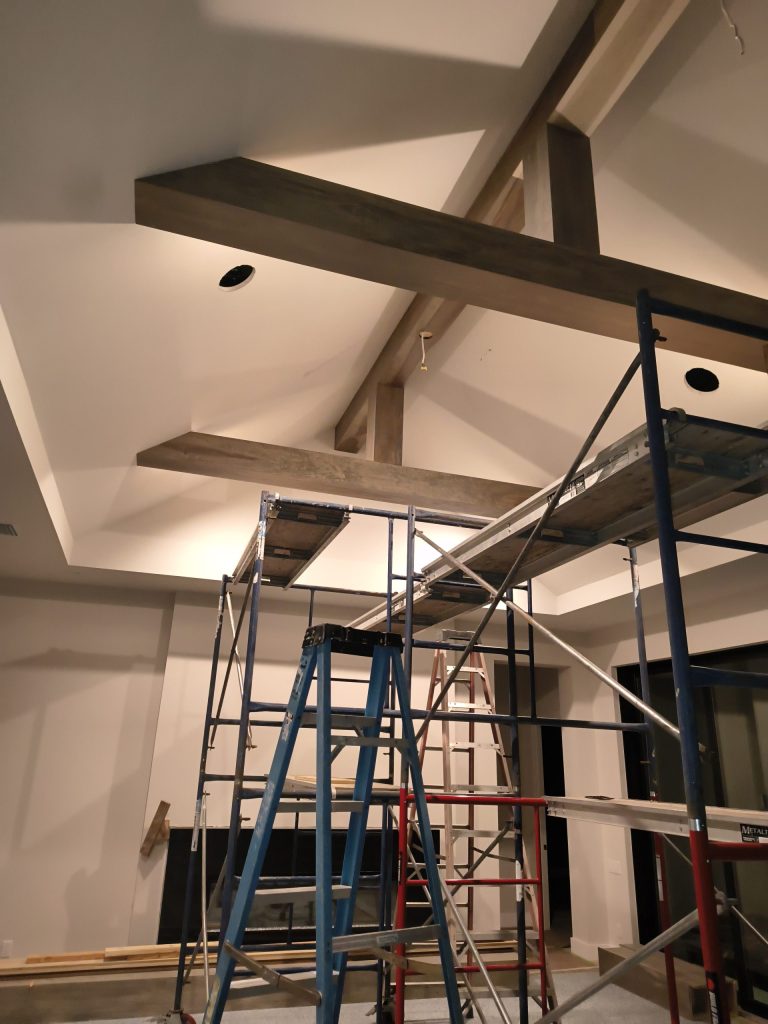
9. Platform/Scaffold
Stable access matters because ceiling work gets sloppy fast when you try to handle boards from a bad stance.
Access gear is part of the install quality, not just convenience. When your footing is steady, the cuts, fits, and fastening all get cleaner.
Where homeowners usually overspend or underspend
The most common overspend is buying niche accessories before the core tools are covered. The most common underspend is trying to force a weak fastening setup or a poor cutting setup into ceiling work because it worked well enough on trim or light wall work. That tradeoff rarely stays cheap once boards start moving or joints stop fitting the way they should.
If you want a practical guide, think in terms of workflow coverage. Can you measure accurately, strike straight control lines, support the stock, make repeatable cuts, fasten overhead with enough bite, and reach the work safely? If the answer is yes, you have what you need. If the answer is no, the missing step should drive the next purchase.
Common mistakes this post helps you avoid
The first mistake is treating ceiling work like lightweight wall paneling. Overhead boards need a stronger fastening lane, a calmer sequence, and better support. The second mistake is letting the tool list blur into one-brand theater. Good work comes from fit and role, not from stamping the same logo on every part of the job.
The third mistake is skipping the little hand tools because they look less exciting than the saw or nailer. In reality, the chalk line, square, tape, and knife are where accuracy gets protected. Those tools keep the room honest before and after the louder tools take over.
The bottom line
A good tongue and groove ceiling goes smoother when the tool list matches the actual workflow. Measure honestly, strike clean reference lines, cut on support, fasten overhead with enough bite, and keep the little hand-tool details from slipping. That is the difference between a post that sounds helpful and a post that actually helps you finish the room cleanly.
This batch of tools stays title-true for that reason. Each pick has a role, each role belongs to the job, and none of the recommendations depend on weak fastening, laser gimmicks, or cross-contaminated flooring advice. That is the lane this kind of post should stay in.
Related reads
That’s it for today, folks. Hope this helps you with your projects. Enjoy the day. I’ll see you on the next one.